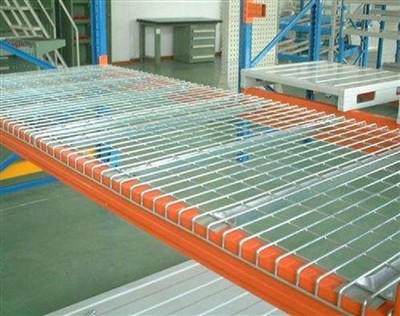
Pallet racking, also known as beam racking, is a type of heavy-duty rack and the most widely used racking system in warehousing. Its main structure consists of upright frames and beams assembled together, with upright pitch of 75mm or 50mm to enable adjustable shelf heights. A pallet rack is designed to store materials on pallets in horizontal rows with multiple vertical levels. These steel structures maximize warehouse storage density by utilizing vertical space and typically require forklifts to load and unload goods.

Pallet rack, as the most common racking option, is widely used in various warehousing settings. If you're considering pallet rack, here are some pros and cons you may want to take note of:
Pros:
1. Lower cost: As the traditional rack, it is made of steel, requiring low initial investment and making it suitable for small and medium-sized enterprises with limited budgets.
2. High load capacity: Each layer load capacity ranges typically span 800–4000 kg, enabling stable storage of heavy goods such as machinery, automotive components, and similar items.
3. Adjustable and versatile: Shelf heights (or layer/level height) can be freely adjusted in increments of 50mm or 75mm, accommodating various sizes of pallets and stored goods.
4. Easy Installation: Featuring a simple structure with main components consisting of upright frames and beams, it can be equipped with accessories such as upright protectors and barriers, making both installation and disassembly effortlessly.


cons:
1. Relatively low storage density: Aisle space must be reserved to ensure forklift operations. Storage density is inferior to drive-in and drive-through racks.
2. Reliance on Mechanical Equipment: Entirely dependent on material handling equipment such as forklifts, with rack heights requiring alignment with forklift operating heights. Exceeding certain heights may necessitate the use of high-reach forklifts or automated equipment.
3. Requirements for cargo form: Applicable only to goods that can be standardized for pallet loading, such as boxed, drummed, or palletized items. Not suitable for bulk, oversized, or irregularly shaped cargo. For example, long materials are better suited for cantilever rack.

In summary, traditional pallet rack offers significant advantages in flexibility, convenience, and cost-effectiveness, making it the preferred choice for the vast majority of manufacturing facilities, logistics centers, and retail distribution centers. However, scenarios demanding maximum space utilization, high automation, or handling goods with unusual shapes may require considering adjustments and optimizations by integrating other racking types.
Wanna get your own warehouse storage equipment? Have interests in racking system?