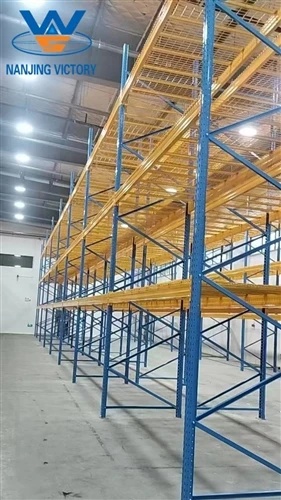
As the most common type of warehouse racking, heavy-duty pallet racks are usually placed back-to-back, while single-row arrangements are much less common. Why is that?
Single-row racking refers to a single row of racks placed independently; this arrangement is typically chosen for wall-adjacent locations. This layout increases the area required for access aisles, which is not conducive to improving warehouse space utilization, so single-row racking is generally not selected in other situations. Furthermore, single-row racking offers relatively lower stability, so if this option is chosen, it is not recommended to build the racks too high.


In a back-to-back configuration, two rows of racks are placed side by side and connected by row spacers. The two rows of racks support each other, which also helps ensure the stability of the shelving unit, reduces bending and deformation of the racks, and prevents goods from twisting or collapsing during storage. At the same time, while ensuring easy access to goods, it significantly reduces the floor space required for aisles, making it highly advantageous for optimizing warehouse storage space.


In summary, back-to-back placement offers greater advantages, which is why it has become the mainstream arrangement. Another option is double-deep racking; however, because of its greater depth, this type of racking requires the use of specialized forklifts. If you want to know more or get your warehouse heavy duty pallet rack, pls feel free to contact us!