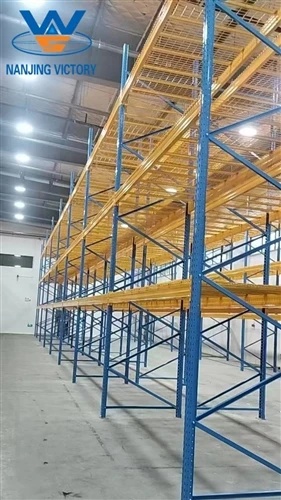
The service life of racking systems is not only directly related to the quality of materials and the rationality of design. Paying attention to daily usage practices can also ensure their durability, thereby extending their lifespan and reducing maintenance costs. Additionally, prioritizing operational safety during transportation, storage, loading and unloading ensures personnel safety.
Before storing goods, it is essential to understand the load capacity of the racking system and avoid overloading:
1) The weight of goods in each storage position must not exceed the rated load specified during the racking design. When calculating the weight of goods, the pallet's own weight must be included.
2) The load-bearing parameters of the racking system are derived from test results under uniform distribution conditions. Therefore, goods should be placed as evenly as possible on the racks to avoid concentrated loads. This prevents deformation or damage to the racking due to uneven stress distribution.

When placing goods on racks, select appropriate storage containers. Heavier items should be stored in the lower sections of the racking system, while lighter items should be placed in the upper sections. This prevents risks to the stability of the racking system caused by top-heavy loading.

When operating forklifts or other machinery: 1) All operators must complete relevant safety training, become familiar with equipment operation and rack layout, and avoid damaging racks due to improper handling. 2) Uprights at aisles and corners are the most common points of rack damage, as they are frequently struck by forklifts, causing deformation. Therefore, protective measures such as uproght protector or barriers should be installed to minimize collisions between forklifts and other equipment against the racks.


Ensure personnel safety by avoiding walking, lingering, or working beneath storage racks. Other personnel must not enter the hazardous area during storage and retrieval operations.
Warehouse shelving should be inspected regularly, particularly for existing damage. Inspections should cover overall deformation and tilt of the racking, looseness or damage to fasteners (such as bolts and nuts), and the condition and positioning of load-bearing components. Should any severely damaged racking components be discovered, promptly notify the manufacturer for replacement to prevent potential hazards.

The above is the essential safety knowledge about using racking units. We hope this information would be helpful in reducing safety risks during racking use.