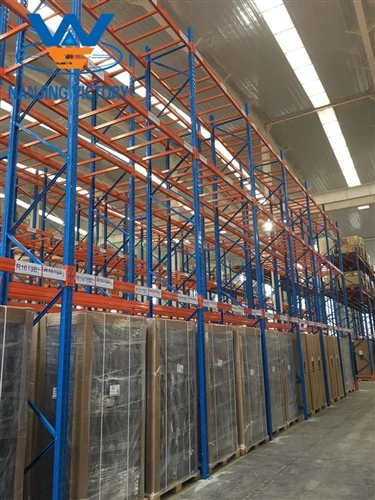
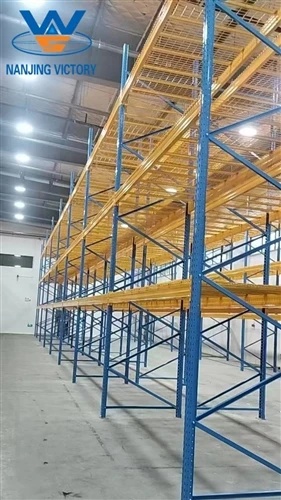
Steel platform is also called steel structure platform. Steel platform is suitable for higher warehouse, heavy cargo, requiring large-span. Advantage is that it can make full and flexible use of space, the upper space can be used as storage or office space. It is widely used in electronic appliances, hardware, communications, and printing industries. lt can be designed to suit customer's require-ments, and making solution for your warehouse, with the safety andstability. The following points should be considered when designing and using steel platforms:
1. The height of steel platform
When designing steel platforms, the primary consideration is height. If equipment such as forklifts will be used, the first level must allow sufficient vertical space, typically 2 to 2.5 meters, with specific design determined by actual requirements. Additionally, the second level should generally provide at least 1.8 to 2 meters of vertical space to ensure personnel working on the upper level have adequate space for safe operations.

2. Load Control
When storing goods, do not exceed the load capacity to prevent floor deformation or collapse. Strive for the uniform distribution, and avoid concentrating stacks of goods whose weight approaches the maximum load limit.
3. Safety Protection
Safety guardrails are essential when platforms are not positioned against walls, as their installation effectively prevents accidents involving personnel or goods accidentally falling. Ensure goods do not protrude beyond the edge of the platform to prevent collision or falling.

4. The Position of Staircases
Staircases are typically positioned against walls for routine access. However, when platform area is large, we recommend installing additional staircases at the middle of platform to facilitate movement for personnel on the second level, while also aiding evacuation arrangements during emergencies.
5. The Loading and Unloading Door
In recent years, the design of using platform lifts for loading and unloading has become increasingly common. This has greatly facilitated the turnaround efficiency of goods while requiring less operator skill compared to forklifts. However, retaining loading and unloading doors remains essential. While they may not be needed under normal situation, they ensure cargo can still be moved when lift platforms become inoperable due to unexpected situations, thereby maintaining normal warehouse operations.

These details not only help optimize space utilization but also facilitate daily operations.
And you want to get a steel platform? Here contact us to know more and get a quote!