What Is Drive-In And Drive-Through Racking?
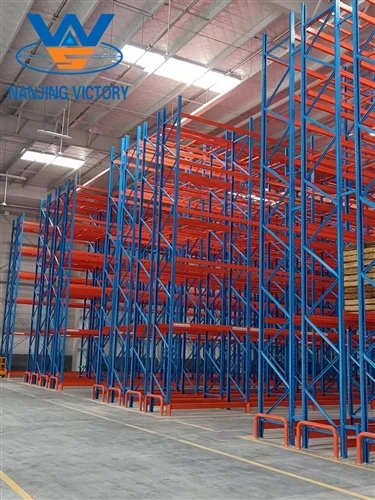
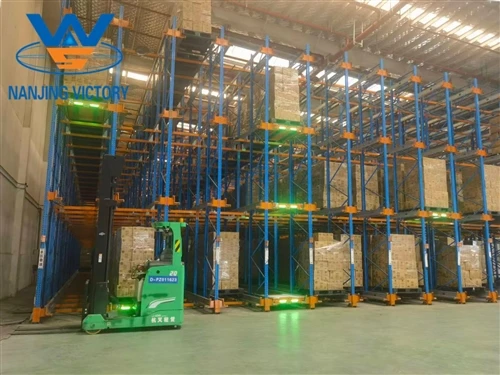
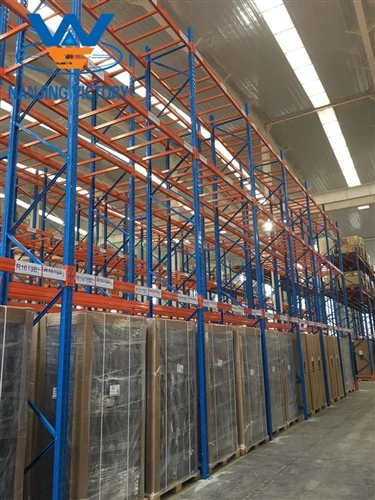
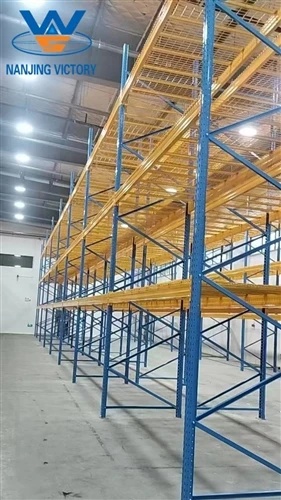
Drive-in and drive-through racks are high-density warehouse storage systems that allow forklifts to drive into the rack aisles to load and unload pallets.
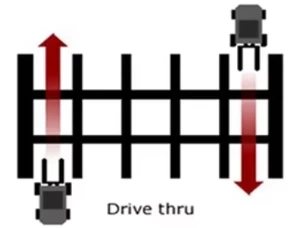
The key difference is that a drive-in system uses a single point of access for loading and unloading, following a Last-In, First-Out (LIFO) principle, while a drive-through system has two access points for loading and unloading, following a First-In, First-Out (FIFO) principle.
Detail Differences Between Drive-In And Drive-Through Racking:
|
Drive-In Rack |
Drive-Through Rack | |
| Access |
Single-ended access Forklifts enter and exit through the same side |
Double-ended access Forklifts enter one end and exit the opposite end. |
| Inventory Management |
LIFO (Last-In, First-Out) principle Newer items are added to the front, blocking older ones |
FIFO (First-In, First-Out) principle Items are loaded from one end and unloaded from the other without blocking |
| Application Scenarios |
High-volume, low-SKU inventory (e.g., bulk storage of same-type goods like raw materials, packaged products with long shelf lives) |
FIFO-required inventory (e.g., perishables, date-sensitive goods, or production line feeding with continuous stock rotation) |
| Layout Configuration |
Often built against a wall Saves aisle space but limits bidirectional movement |
Located in an open area with two access points Facilitates smooth traffic flow but occupies more aisle space |
| Additional | Slightly more space-efficient | Faster stock rotation and higher throughput |
| Images | 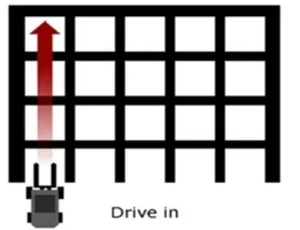 |
 |